When choosing a hose for a fuel line, it is not enough for the hose to say "oil resistant". Gates explicitly states that some of the air/water and hydraulic hoses in our range must not be used with fuel, and it recommends a separate hose for fuel transfer.
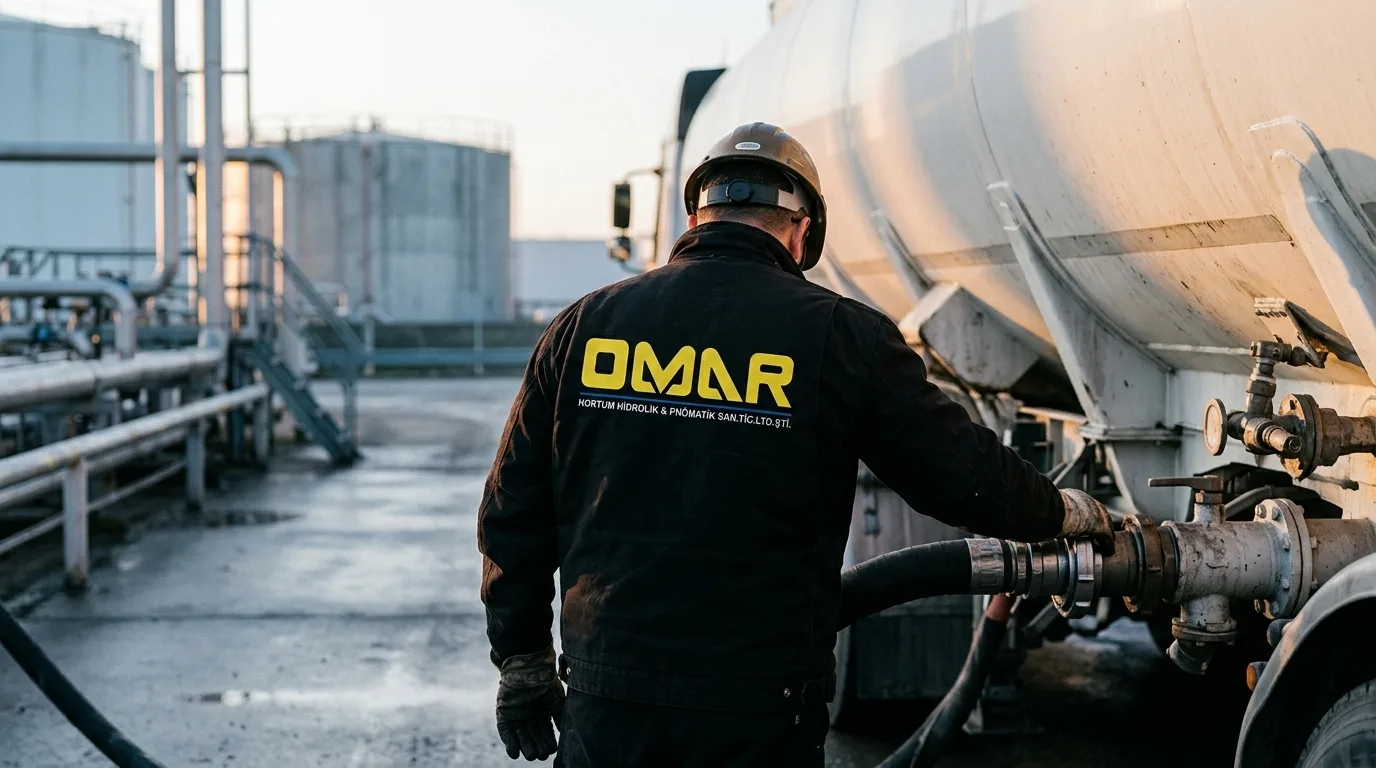
Along with marine hoses, we also ship fuel hoses to our customers on the Aegean coast. In this article we summarize which Gates hoses in our range are suitable for fuel and which are not.
For fuel transfer: Multi Master GMV
- Gates® Multi Master GMV Steel Wire Spiral Hydraulic Hose (R4): The hose in our range that Gates recommends for transferring refined fuels and other petroleum products.
- Use: lines transferring refined fuels or other petroleum products, hydraulic return and suction lines, SAE 20R5 coolant lines; also air and water.
- Temperature: general range -40 °C to +135 °C; upper limit +49 °C for fuel and +100 °C for coolant. Gates says fuel must not be transferred above +49 °C.
- Standards: SAE 100R4, SAE 30R5 and SAE 20R5 (excluding tube sizes). The tube meets ARPM Class A and SAE 20 Class B standards.
- Fittings: MegaCrimp in sizes -12…-20, GlobalSpiral Plus in -24 and -32; GL in -40, -48 and -64, and clamps over beaded fittings in low-pressure applications.
- Flexibility: 1:1 bend radius; kink resistant.
Hoses in our range that Gates says not to use with fuel
- Gates® Lock-On Plus Air and Water Hose (LOLA): Gates states that it must not be used with gasoline or diesel fuel unless approved by Gates. It is intended for air, water, antifreeze and petroleum-based hydraulic oils.
- Gates® MegaTech™ Steel Wire and Textile Braided Hydraulic Hose (R5): Gates does not recommend it for gasoline and diesel fuel applications. It is intended for pressurized hot oil return lines, air compressor lines and hydraulic steering lines.
- Gates® Plant Master™ Hose: Because of its limited ARPM Class C oil resistance, Gates says it must not be used in oily environments; it is an air and water hose.
The phrase "compatible with petroleum-based fluids" in the descriptions of the hydraulic hoses in our range (MXT, M2T, G1, EFG, MXG, 4XH, 4XP, G2XH) refers to hydraulic fluids. Gates makes no fuel transfer recommendation for these hoses.
Fuel hoses not in our range
Gates has separate fuel hoses for jobs such as tanker filling, hose reel dispensing and ship bunkering. Consult us about Gates fuel hoses that are not in our range as well; tell us what you need by phone and we will look at the supply options together.
How to choose
When choosing a hose for a fuel line:
- Suitability: Check that Gates explicitly recommends the hose for fuel transfer. In our range, Multi Master GMV carries this recommendation.
- Temperature: For Multi Master GMV, the upper limit for fuel is +49 °C. Gates notes that the service life of the hose assembly decreases as the operating temperature rises.
- Size and pressure: The working pressure of each size is given in the size chart on the product page.
- Fitting: Depending on the size, MegaCrimp, GlobalSpiral Plus or a GL / clamp connection.
Frequently asked questions
Which hose should I buy for transferring diesel or gasoline?
In our range, the hose Gates recommends for refined fuel transfer is Multi Master GMV; the fuel temperature must not exceed +49 °C. For jobs such as tanker filling or ship bunkering, Gates also has fuel hoses that are not in our range; give us a call.
Can I transfer fuel with an air/water hose?
Gates does not recommend this for the air/water hoses in our range: Plant Master is not used in oily environments, and Lock-On Plus is not used with gasoline or diesel without Gates approval.
Can a hydraulic hose be used in a fuel line?
The phrase "compatible with petroleum-based fluids" in hydraulic hose descriptions refers to hydraulic oils; Gates makes no fuel transfer recommendation for these hoses. For fuel, see Multi Master GMV.
Why does the +49 °C limit matter?
Gates says fuel must not be transferred above +49 °C with Multi Master GMV, and notes that the service life of the hose assembly decreases as the operating temperature rises.